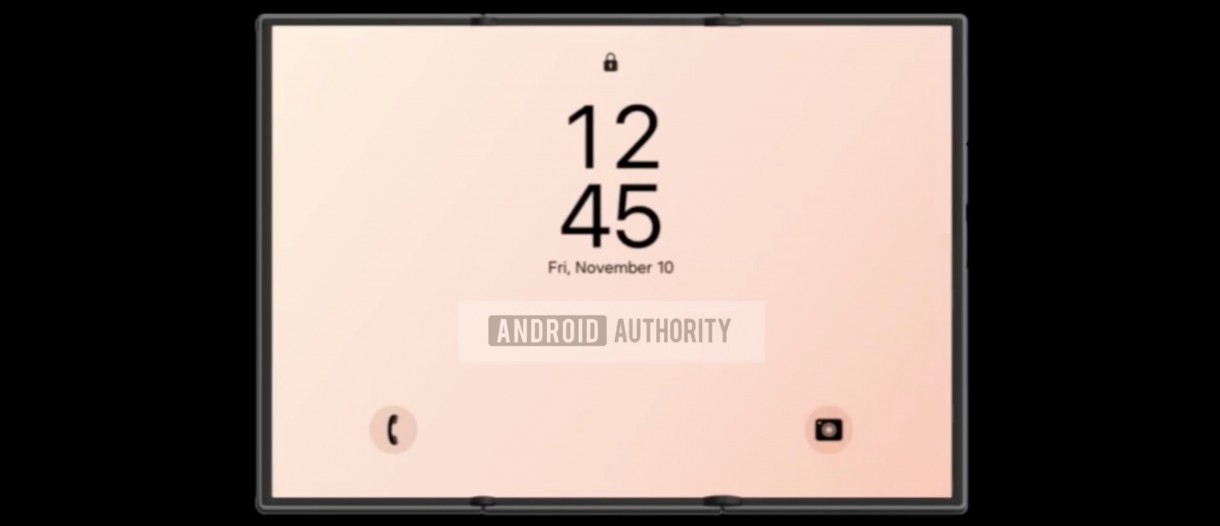
Samsung has long been at the forefront of foldable smartphone innovation, consistently pushing the boundaries of form factors and display engineering. From the original Galaxy Fold to the refined Galaxy Z Fold and Flip series, the company has played a defining role in shaping the foldable market. Now, a new leak emerging from One UI 8 firmware suggests that Samsung is preparing its most ambitious design yet: a tri-fold smartphone.
This leak provides the clearest indication so far that Samsung is actively developing a dual-hinge, triple-panel foldable device, potentially branded as the Galaxy G Fold. Internally referred to as “Multifold-7”, the device appears to be a near-production implementation of concepts Samsung has previously teased at major tech events.
In this detailed update, our team at Technologies For Mobile breaks down everything revealed by the One UI 8 leak, including the design, folding mechanism, camera layout, software behavior, production timeline, and what this device could mean for the future of foldables.
One UI 8 Leak Confirms a Dual-Hinge Tri-Fold Device
The strongest evidence for Samsung’s tri-fold phone comes directly from One UI 8 system code, where animations, warnings, and internal references clearly point to a dual-hinge, inward-folding device.
Unlike standard foldables that rely on a single hinge, this new device uses two separate hinges, allowing the display to fold into three sections. The folding mechanism is described as forming a “G-shaped” inward fold, meaning both outer panels fold inward toward the center panel. This approach closely mirrors Huawei’s S-style tri-fold concept but with Samsung’s own hinge engineering and UI adaptations.
The inclusion of these animations and warnings in One UI 8 strongly suggests that Samsung is far beyond the concept stage and is actively testing software behavior for real-world use.
Folding Mechanism and Structural Design
According to the leak, the tri-fold phone features asymmetric hinges, meaning the two hinges are not identical in size or folding behavior. This asymmetry likely serves two purposes:
First, it allows the panels to fold inward without overlapping incorrectly or stressing the display.
Second, it helps the device close fully flat, improving durability and pocketability.
When folded, the device seals itself using a blank rear panel, which covers part of the folded structure. This panel appears intentionally unadorned, acting as a protective surface to prevent exposure of the flexible display edges.
Samsung’s choice of a fully inward-folding design also highlights its continued focus on display protection, a lesson learned from early foldable generations.
External Design and Camera Layout
The rear design of the tri-fold device includes a triple-camera module, consistent with Samsung’s premium Galaxy lineup. While exact sensor specifications remain unknown, the presence of a triple-camera system suggests flagship-level imaging capabilities.
In addition to the main rear cameras, the device also includes:
- A cover display for quick interactions when folded
- A selfie camera integrated into the cover display
This setup allows users to handle notifications, calls, and basic tasks without unfolding the entire device, maintaining practicality despite the complex form factor.
The overall external design aligns with Samsung’s recent foldable aesthetics, favoring clean lines, minimal branding, and functional symmetry.
Internal Codename and Branding Clues
Within the One UI 8 firmware, the device is labeled as “Multifold-7”, a name that clearly distinguishes it from the existing Galaxy Z Fold and Flip families.
Externally, industry rumors and leaks refer to the device as the Galaxy G Fold, a name that could indicate a new foldable category altogether. If Samsung adopts this branding, it would signal a strategic expansion of its foldable portfolio rather than a simple extension of the Z Fold series.
This separate naming approach makes sense, given that a tri-fold device represents a fundamentally different user experience and usage pattern.
Software and UI Behavior Revealed
One of the most interesting aspects of the leak is the presence of animated visuals showing how the device behaves in real-world scenarios.
These animations demonstrate:
- How the UI adapts as the device unfolds panel by panel
- Seamless transitions between folded, partially unfolded, and fully unfolded states
- App scaling behavior across different screen configurations
This suggests that Samsung is heavily optimizing One UI 8 to support dynamic screen resizing, multitasking layouts, and continuity between usage modes.
The software also includes a fold warning message, explicitly emphasizing the fragility of the folding mechanism. This warning appears during folding animations, reinforcing that Samsung is aware of the mechanical complexity and wants users to handle the device carefully.
A Design Rooted in Samsung’s Earlier Concepts
The leaked design closely resembles Samsung’s earlier tri-fold concepts showcased at Mobile World Congress in previous years. Those concept devices demonstrated multi-panel folding displays aimed at productivity, media consumption, and multitasking.
What makes this leak significant is that it shows Samsung has moved beyond experimental prototypes and is now integrating the concept into its core software platform. This transition from concept to firmware-level support is a major step toward commercialization.
Expected Announcement and Launch Timeline
According to the leak and supporting rumors, Samsung is expected to briefly mention the tri-fold phone at an upcoming Unpacked event, likely as early as July. This mention may not include full specifications or pricing but could serve as an official acknowledgment of the device’s existence.
Mass production is reportedly scheduled to begin around September 2025, indicating that Samsung is still finalizing engineering and supply chain readiness.
The commercial launch window is expected between October and December, positioning the tri-fold phone as a late-year flagship or limited-release innovation showcase.
This staggered approach would allow Samsung to gauge market interest, manage production risks, and refine durability before scaling further.
Market Positioning and Expected Audience
A tri-fold smartphone is unlikely to be a mass-market device at launch. Instead, it is expected to target:
- Power users and professionals
- Early adopters of foldable technology
- Users focused on multitasking, productivity, and large-screen experiences
Pricing is expected to be significantly higher than current Galaxy Z Fold models, reflecting the complexity of the dual-hinge system, advanced display engineering, and limited production volumes.
Challenges Samsung Will Need to Address
While the tri-fold concept is exciting, it also presents several challenges:
Durability remains the biggest concern. With two hinges and multiple folding points, long-term reliability will be under intense scrutiny.
Weight and thickness are also critical factors. Folding three panels into a compact form without making the device bulky will require exceptional engineering.
Software optimization must be flawless. Users will expect smooth transitions, stable multitasking, and consistent app behavior across all folding states.
Samsung’s inclusion of fold warnings in the UI suggests the company is taking these challenges seriously.
Why This Leak Matters
This One UI 8 leak is important because it provides the clearest evidence yet that Samsung’s tri-fold phone is not just an experimental idea but an actively developed product.
By embedding animations, warnings, and UI behavior into its core software, Samsung is signaling confidence in the form factor and preparing its ecosystem for a new category of devices.
If successful, the tri-fold phone could redefine how users think about smartphones, tablets, and portable productivity devices.
A Glimpse Into Samsung’s Foldable Future
Samsung’s tri-fold smartphone leak offers a fascinating glimpse into the next evolution of foldable technology. With a dual-hinge inward-folding design, advanced software support in One UI 8, and a clear production roadmap, the device appears closer to reality than ever before.
While challenges remain, Samsung’s track record in foldable innovation suggests that this tri-fold phone could set a new benchmark for the industry. Whether it launches as the Galaxy G Fold or under a different name, it represents Samsung’s bold vision for the future of mobile computing.
As we move closer to its expected unveiling and production timeline, this device could mark the beginning of an entirely new chapter in smartphone design.
Stay Connected With Us
At Technologies For Mobile, our team brings you professional, in-depth coverage of smartphones, foldables, wearables, and emerging technology trends.
For more in-depth smartphone reviews, gaming tests, and honest tech analysis, visit our official channel:
www.technologiesformobile.com
Stay connected with us as we continue to track Samsung’s tri-fold phone and the future of foldable innovation.